
Israel is no longer the valiant and beleaguered underdog, but increasingly seen as an increasingly arrogant oppressor seeking to crush another old nation under its jackboots, says Mohan Guruswamy.
Railways must pull back its share of freight traffic.

'Castro's huge appeal lies in the fact that he stood up to the Americans.' 'However, it becomes difficult to be judgmental about his legacy, because there are huge uncertainties about the future of the Cuba that he built,' says Ambassador M K Bhadrakumar.

'One big problem for the RSS is, while they spread their ideology of hard, Hindu-ised Indian nationalism, the absence of their own pantheon of modern nationalist giants. They missed out on the freedom movement quite comprehensively, in some ways comparable to the Muslim League and latter-day Communists. They have to find heroes elsewhere.' 'They borrow who they can from the Congress, like Madan Mohan Malviya and Sardar Patel, and then steal the entire lot of revolutionaries, from Bhagat Singh to Netaji, never mind that many of them were extreme leftists.'

U R Ananthamurthy on the importance of keeping alive our regional languages.

The winter session of Parliament beginning on Thursday is expected to be a stormy affair, with the opposition set to raise the 'intolerance' issue.

Opposition parties ask the government to listen to the concern of the intellectuals returning awards.

Whether we flew aircraft or mastered plastic surgery is immaterial for modern India, what matters is if ancient Indians understood the science and art of settlement planning, architecture and governance of natural resources. This is the history we need to learn, says Sunita Narain

There are indications that India may be shedding its Stockholm Syndrome vis-a-vis the Modi government, says Bharat Bhushan.

The Congress has kept quiet on the way the Union home ministry has handled innumerable blast cases under its rule. It has not openly condemned the bias that pervades within its government and the security agencies, says Neeta Kolhatkar.

Calling people of the northeastern region by "derogatory" names will soon become a non-bailable offence and land you in jail for up to five years.
It will be difficult for the Indian equity to outperform overall growth to the extent bullish observers expect.

In bilateral interfaces relations with China have also to be given due weight, opines Premvir Das

Now that Tamil Nadu's tallest politician is no more, it remains to be seen how new political re-alignments could shape up, says N Sathiya Moorthy.

There are unprecedented political implications of identification based on 'biological attributes of an individual', such as employed by Aadhaar, warns Gopal Krishna.

Total Siyappa is so insipid, it implores your mind to wander off every few minutes.

India's economy is not like Western ones, and thus needs restrained fiscal policy even during a recession, says Ajay Shah.
'High denomination cash notes which was 1.4 lakh crores of Rs 500 and Rs 1,000 notes in 2004 became Rs 15.5 lakh crores in 2016.' 'If it had been allowed, by 2022, it would have been Rs 34 lakh crores, and that would have been the end of the Indian economy.' 'Demonetisation was a huge hit on the head of the economy, but without the hit, you could not U-turn the economy.'

On Sunday, Prime Minister Narendra Modi expanded his Cabinet and inducted 21 new ministers. Of these, 4 - Manohar Parrikar, JP Nadda, Suresh Prabhu and Birender Singh were appointed as Cabinet ministers. Other than this, Modi has inducted 17 other ministers of state. Here's a quick look at them:

'Nitish should be portrayed as an upholder of political dharma.'

Tripura's popular chief minister shows up the failures of the elitist central leadership of India's Left, says Devesh Kapur

Abstaining from voting on a UNHRC resolution on Sri Lanka was dictated as much by necessity and self-preservation as by a desire to place bilateralism at the front and centre of New Delhi's ties with Colombo, says Ramesh Ramachandran.
'The beef fest is about an individual's freedom to wear what he wants and eat what he wants. The students were protesting against the state interfering with their personal liberties.' 'Everybody has the right to air his or her opinion and lead a life they want. Nobody has any right to put restrictions on others. What we need is tolerance but what we see is intolerance.' Deepa Nisanth, a lecturer who backed Kerala's beef fest, on why she supported the students in their protest.
The local labour force is streaming out of the region, creating a vacuum that makes it easier for the Bangladeshis to fill in, says R N Ravi

'India has to understand that the permanent state of war that exists between India and Pakistan has to be expected,,' says Colonel Anil A Athale (retd). 'The only way to ensure peace or absence of war is to maintain a militarily-dominant position over Pakistan.'

With Jaitley preferring continuity over change, good days might take a little longer to arrive, says Shankar Acharya.
Why are more and more young people quitting their day jobs to travel? Abhishek Mande Bhot finds out.

Rajeev Srinivasan on whom the Congress might put forth as its leader in 2014.

The Sangh's leadership has boxed itself into a tight situation. It now needs to wait and see if Modi can deliver in the Lok Sabha polls, says Nilanjan Mukhopadhyay.

The attacks on the French satirical magazine Charlie Hebdo is merely one in a long list of attacks on the media by extremist groups that would like to mandate what and how of free press. So, for the uninitiated, we take a stroll down recent times to see how the media and media persons have seen fearful responses to perceived transgressions.

Given the relative rates of gross domestic product growth, the differential will increase.
A reformed Planning Commission should reflect the diversity of Indian debate.

'We saw how vigorous democracy was when it dislodged authoritarianism under Indira Gandhi. We saw its vigour again when it voted Mr Modi out of humble origins as prime minister. It was Nehru who laid that foundation for India and what is worrying today is Modi's rather imperial style of functioning,' says writer Nayantara Sahgal.

Buried in a Kolkata cemetery is an Englishman who served India well during her struggle for freedom. Charles Freer Andrews was a benevolent force that neither the Indians, nor the British could ignore.

"This is a tribute to our daughter," said Nirbhaya's father, who was present in the RS to watch the proceedings.

Nehru decided to build The Ashok in New Delhi to host a UNESCO conference. For a prime minister focussed on India building with projects like the Bhakra-Nangal Dam, IITs and factories, "the hotel spoke of the gumption of the country at that time." Manavi Kapur traces the eventful journey of the hotel, which has now completed 60 years.

Pranab Mukherjee's book The Dramatic Decade: The Indira Gandhi Years takes the readers through the economic and social unrest of the period leading up to the emergency, rise and fall of leaders, many splits within the Congress, while promising to offer more in the next two volumes of the trilogy, says Nivedita Mookerji.

Hers is a rags-to-riches story for the ages, peppered with risks, determination and strokes of luck.
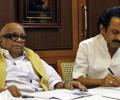
M K Stalin might not have his father's charisma, but he has learnt the ropes the long, hard way, says T E Narasimhan
